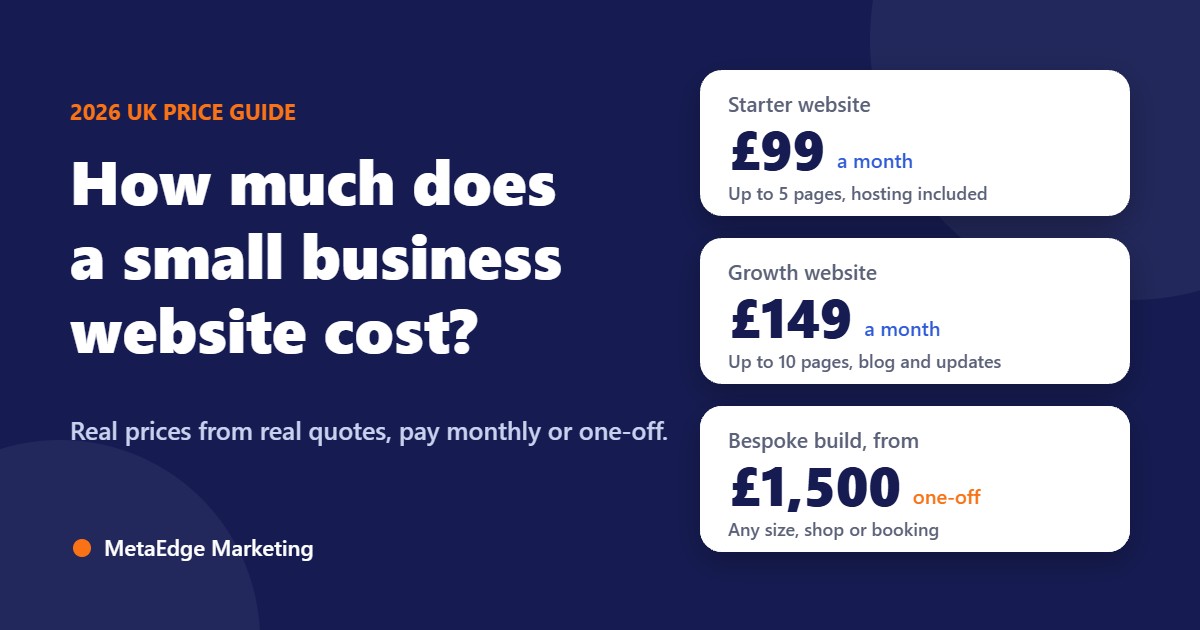
A small business website in the UK costs anywhere from about £99 a month on a pay-monthly plan to £1,500 or more as a one-off bespoke build. The right figure depends on how many pages you need, whether you sell online, and whether you want to own the site outright from day one.
I’m Cameron, and I build websites for local service businesses. Below are my real prices, what actually drives the cost up or down, and the extras people forget to budget for. If you’re asking how much does a website cost UK-wide, this is the version without the sales spin.
Website price builder
Move the sliders and tick what you need to see what your website is likely to cost, as a one-off build or paid monthly. The prices come from real quotes I have sent this year.
What my websites cost in 2026
These are the prices on my pricing page, and I’m not VAT registered, so there’s nothing to add on top.
- Starter Website, £99 a month. Up to 5 pages, mobile responsive design, conversion-focused copywriting, a contact form, Rank Math SEO setup, Google Analytics, an SSL certificate, and hosting and maintenance. There’s a 12 month minimum.
- Growth Website, £149 a month. Up to 10 pages, advanced contact and quote forms, full SEO setup with Rank Math Pro, Analytics and Tag Manager, a blog section, security monitoring and priority support. Also a 12 month minimum.
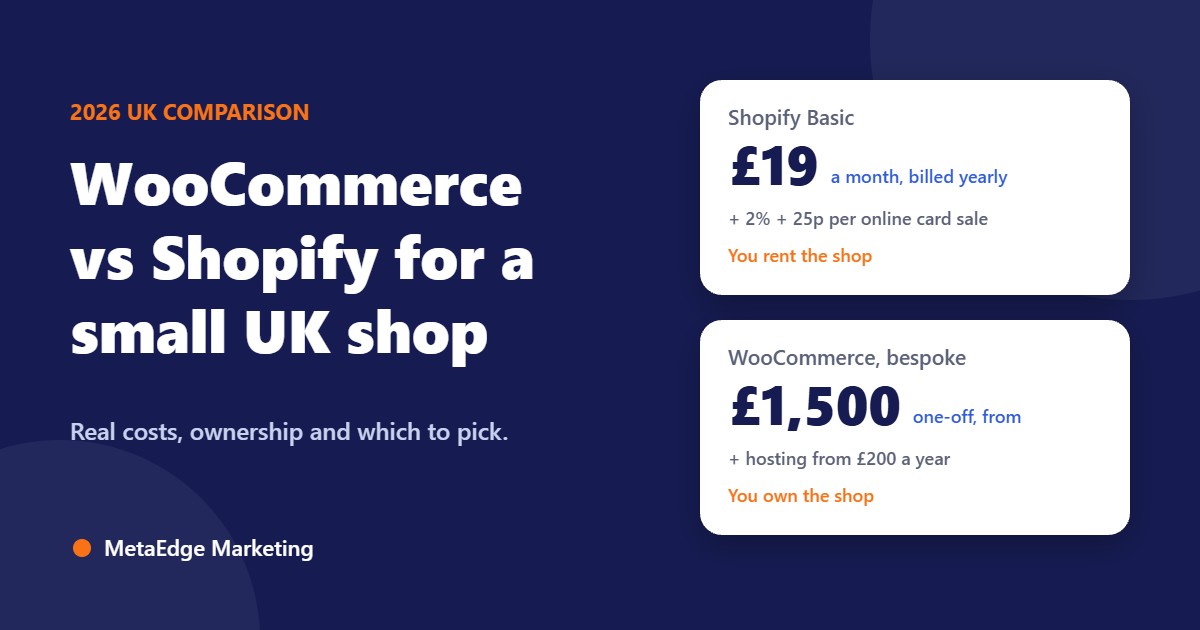
- Bespoke Build, from £1,500 one-off. Unlimited pages, a fully custom design, WooCommerce if you want to sell online, advanced integrations, a training session and 30 days of support after launch. You own everything from day one.
On the monthly plans the first month’s payment covers the setup, build and launch. There’s no separate setup fee.
What drives the cost of a business website
Five things move the price more than anything else.
Number of pages. A five page site (home, about, two services, contact) is a very different job from a twenty page site with a page for every service and every town you cover.
Custom design or a polished template. A clean, well built layout does the job for most local businesses. Fully custom design takes more time, so it costs more.
Online selling. The moment you add a shop, you’re paying for product pages, payments, delivery rules and order emails. That’s where most of the extra time goes.
Who writes the words. Copy that actually persuades takes effort. If you supply good copy yourself the cost drops, but most people find writing about their own business harder than they expect.
Integrations. Booking systems, CRMs, quote calculators and the like each add build and testing time.
DIY, freelancer or agency: how the options compare
There are three realistic routes, and each one has a trade-off.
Doing it yourself with a website builder is the cheapest way to get something online. You pay with your time, and the result usually looks like a template because it is one. It’s fine for a side project. For a business that needs the phone to ring, I’d be cautious.
A freelancer gives you a person to talk to and usually a better result, but quality varies a lot and you need to ask who looks after the site after launch.
An agency brings more people and more process. That’s useful on large projects, but a small business can end up paying for meetings it doesn’t need.
I sit in the freelancer camp on purpose. You deal with me directly from the first call to the monthly report, so there’s nobody between you and the person building the site.
Hidden costs to budget for
The headline price is rarely the whole story. Ask about these before you sign anything:
- Hosting. Someone has to pay for it. On my monthly plans it’s included, along with maintenance.
- Maintenance and updates. WordPress, plugins and security patches need regular attention. Skip it and sites get slow, broken or hacked.
- Copywriting. Some quotes assume you’ll write every page yourself.
- Photos. Real photos of your work beat stock images, but someone has to take them or pay for them.
- Domain and email. Small annual costs, but they need to be in your name.
- SEO. A website with no search setup is a brochure nobody finds. Check what’s included.
I’d also check that you’re not tied in to something you can’t leave. After the initial term my plans roll monthly on 30 days’ notice, and I’d never make it hard to leave.
Pay monthly or pay once?
Paying monthly keeps the upfront cost low and bundles hosting and upkeep into one number. It suits businesses that would rather spend their cash on tools and vans than on a lump sum. The catch is the 12 month minimum and the fact that you’re renting rather than owning.
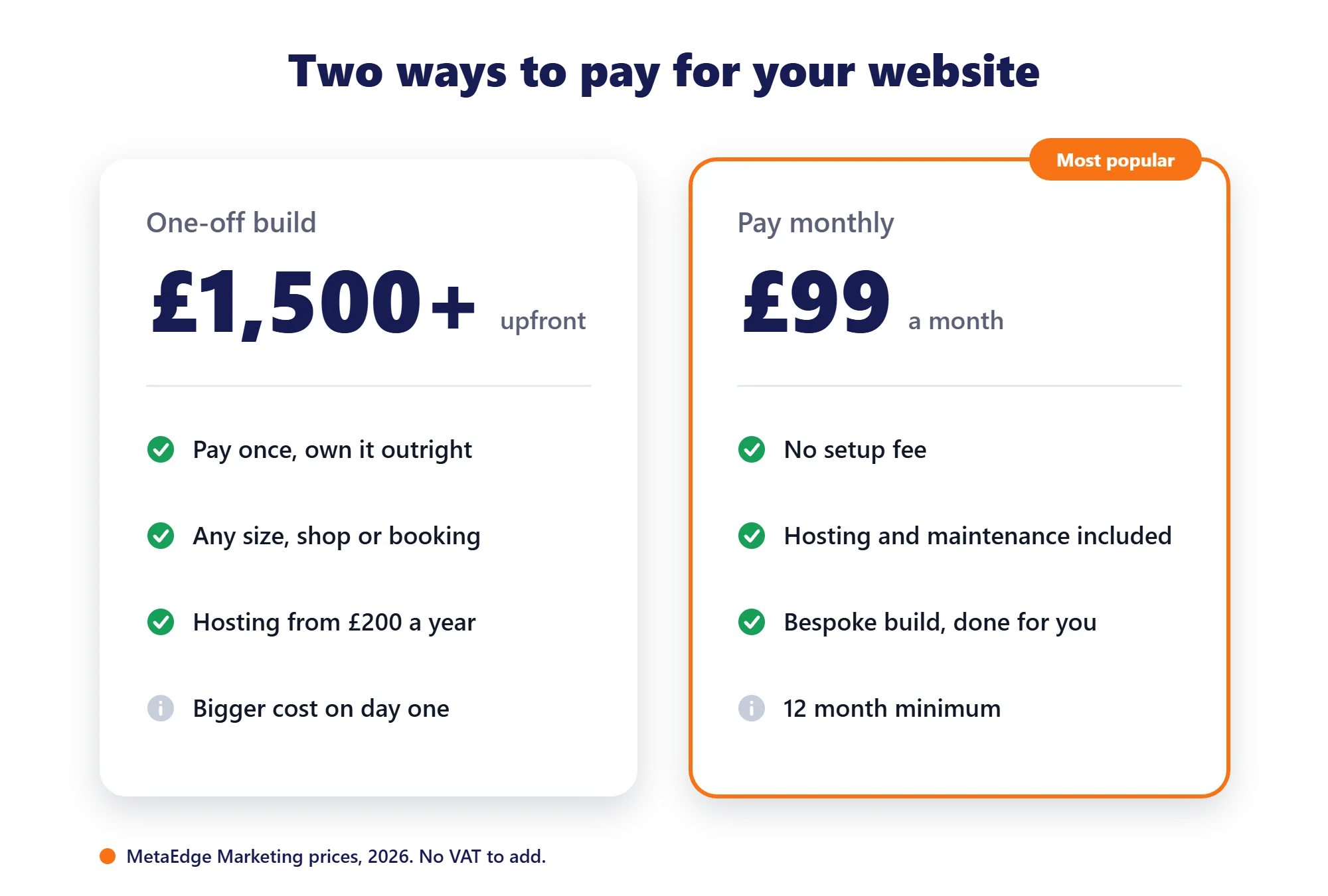
A one-off bespoke build costs more on day one, but you own everything and you decide who looks after it afterwards. If you plan to sell online or need something the monthly plans don’t cover, it’s usually the better route.
Neither is right for everyone. If your budget is tight, starting on a monthly plan and upgrading later is a perfectly sensible way to do it.
Is a cheap website worth it?
A website is only worth what it brings in. A cheap site that nobody finds costs you the price of the site plus the work you never won. A more considered one pays for itself with a handful of jobs.
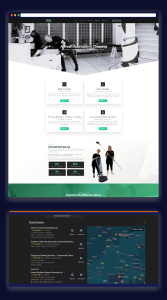
One of my clients, Aston Commercial Cleaning, now ranks #1 on Google for commercial cleaning in Buckinghamshire, and enquiries went up 45% month on month, from 20 to 29. That came from a website built to look credible to facilities managers, plus a local SEO plan behind it. Spend on a site is easier to judge once you’ve put a value on one new customer.
If you’re not getting enquiries from the site you already have, read my seven common reasons a website isn’t getting enquiries before you pay for a rebuild. The fix is often cheaper than you think.
How to get an honest quote
Whoever you talk to, give them the same brief so the quotes are comparable. Tell them how many pages you need, whether you’ll sell online, what you want people to do on the site, and whether you need help with SEO. Then ask what’s included after launch.
If you want to see what a project like yours would cost with me, my website design page explains the process, and the free website check or strategy call is the quickest way to get a straight answer. I’ll tell you what’s realistic for your budget rather than oversell you.
FAQ
How much does a basic business website cost in the UK?
For a simple five page site, my Starter plan is £99 a month with a 12 month minimum. A one-off bespoke build starts from £1,500.
Is there a setup fee?
Not on my monthly plans. The first month’s payment covers the setup, build and launch.
Do I own my website if I pay monthly?
The one-off bespoke build is yours from day one. If you want that certainty, ask any provider in writing who owns the site and the domain.
Do prices include VAT?
MetaEdge isn’t VAT registered, so the price you see is the price you pay. Other suppliers may quote without VAT, so always check.
Can I start small and add more later?
Yes. Many clients start with a website and add SEO or Google Ads once they’re happy with the results.